Let us be honest for a moment. Cleaning the blinds is rarely at the top of anyone’s to-do list. It sits somewhere between de-scaling the kettle and organizing the cupboard under the stairs. It is one of those jobs we all put off.
However, your blinds work hard for you. Every single day, they act as a shield against the sun and a filter for the air coming into your home. Over time, they collect a surprising amount of dust, pet hair, and cooking grease. If left unchecked, this build-up can not only ruin the look of your window dressing but also degrade the material itself.
The problem is that many people are terrified of cleaning them. They worry about shrinking the fabric, warping the wood, or bending the metal slats.
The good news is that blind maintenance does not have to be difficult or risky. The secret lies in knowing exactly what your blind is made of. What works for a waterproof PVC roller blind will absolutely ruin a real wood Venetian.
In this comprehensive guide, we are going to break down exactly how to clean every type of blind safely and effectively. Whether you are dealing with a dusty Roman or a sticky kitchen Venetian, we have the solution.
The Universal “Golden Rules” of Blind Cleaning
Before we dive into the specific materials, there are three rules that apply to every single blind type.
1. Dust First, Wash Later Never introduce water to a dusty blind. If you apply a wet cloth to a layer of dust, you simply create mud. This smears across the fabric or slat and is incredibly difficult to remove. Always vacuum or dust the blind thoroughly before you even think about getting a bucket.
2. The Vacuum is Your Best Friend Use the upholstery attachment on your vacuum cleaner. This is the small tool with the bristled strip. It dislodges dust without scratching the surface. Always use the lowest suction setting to avoid sucking the fabric into the nozzle and creasing it.
3. Test Patch Everything If you are using a new cleaning spray or stain remover, test it on a tiny, hidden area first. The back of the hem or the very top of the blind is a good spot. Leave it for 24 hours to ensure it does not bleach or discolour the material.
How to Clean Wooden Blinds (Real Timber)
Real wood blinds add a beautiful, organic warmth to a room. However, they are the most sensitive to cleaning. Wood is porous and hygroscopic, meaning it absorbs moisture.
The Danger Zone: Water. If you soak a real wooden blind, the slats will swell. As they dry, they can warp, twist, or crack. The finish may also peel. You must keep water away from real wood.
The Routine Clean:
- Close the slats: Tilt the blinds so they are fully closed facing downwards.
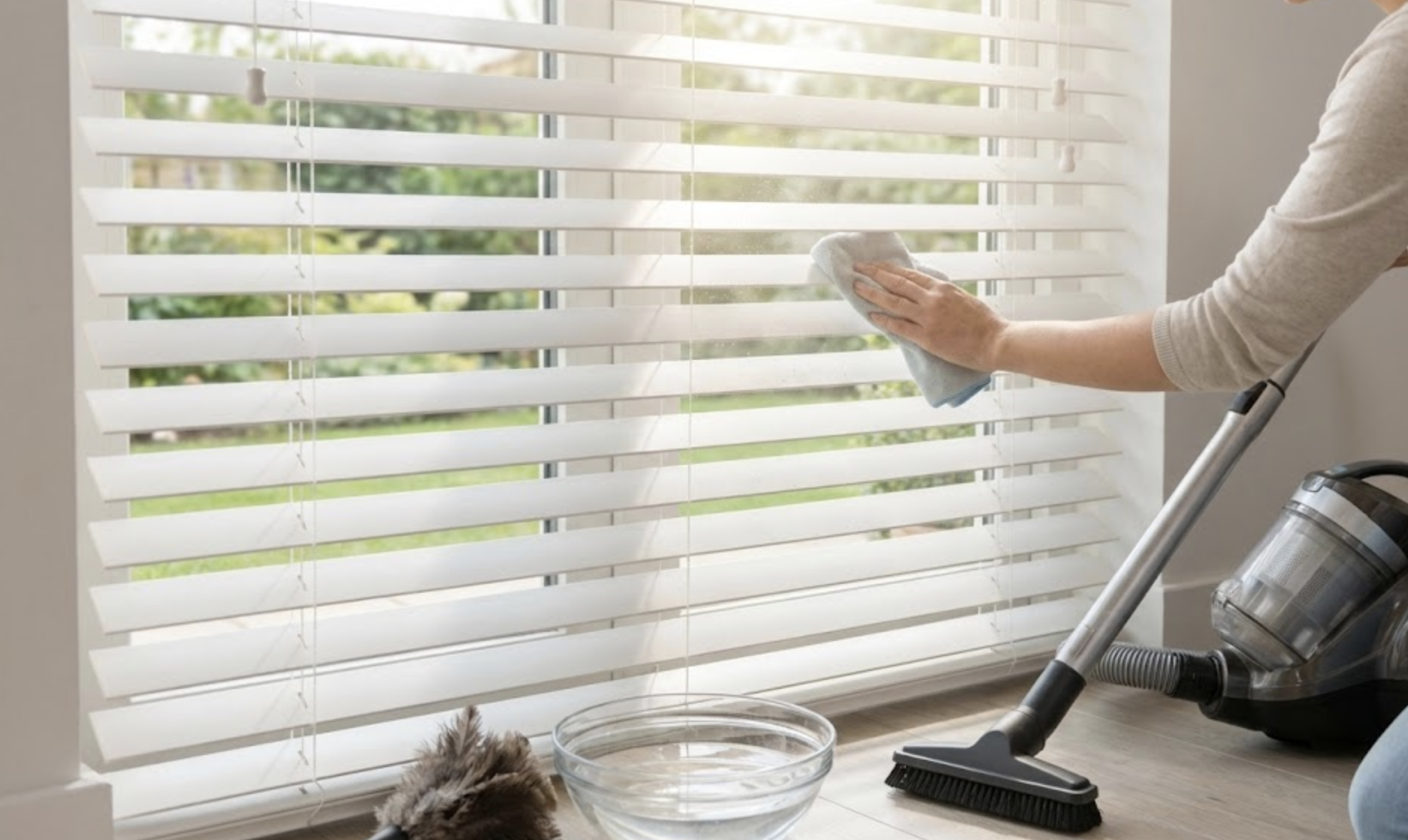
- Dust down: Using a feather duster or a soft microfibre cloth, wipe in a downward motion. Do not wipe upwards as this can unhook the slats.
- Reverse: Tilt the slats the other way and repeat.
- The Slat-by-Slat approach: For a deeper dust, put a clean cotton sock over your hand. Run your hand along each individual slat, gripping it gently between your thumb and fingers. This cleans the top and bottom simultaneously.
The Deep Clean (for sticky spots): If you have a sticky mark (perhaps a fly spot or a splash of coffee), do not reach for the bleach.
- Take a soft cloth and dampen it very slightly. It should be almost dry to the touch.
- Gently buff the spot.
- Immediately dry the area with a piece of kitchen roll.
- For a rejuvenating finish, you can use a specialist wood furniture polish or lemon oil, but apply it to the cloth first, never directly onto the blind.
How to Clean Faux Wood and PVC Blinds
These are the workhorses of the window world. Usually found in kitchens and bathrooms, they are designed to be tough. Faux wood is essentially a high-quality composite PVC, making it completely waterproof.
The Routine Clean: Follow the same dusting procedure as real wood blinds. The “sock on the hand” trick works wonders here too. Because PVC generates static, you might find dust clings to it more stubbornly. A tumble dryer sheet is a fantastic hack here. Wipe the slats with a dryer sheet to remove dust and leave an anti-static coating that repels future dust.
The Deep Clean: Because these are waterproof, you can be much more aggressive with your cleaning.
- Fill a bowl with warm water and a splash of washing-up liquid.
- Dip a soft cloth in, wring it out, and wipe down each slat.
- For really grimy kitchen blinds covered in grease, you can use a mild degreaser or a vinegar-water solution.
- Top Tip: Do not ignore the cords. White cords on kitchen blinds often turn grey. pinch the cord with a baby wipe and run it up and down to lift the grime.
How to Clean Aluminium Venetian Blinds
Aluminium blinds are great for light control, but they are physically delicate. The metal is thin and flexible. If you are too rough, you will kink the slat. Once an aluminium slat is kinked, it is impossible to smooth out perfectly again.
The Routine Clean: Use a feather duster or a very soft vacuum brush. We recommend holding the bottom rail of the blind with one hand to pull it taut (gently) while you vacuum. This stops the slats from banging against the window or getting sucked into the machine.
The Deep Clean: There is a myth that you should take these blinds down and put them in the bath. While the slats are waterproof, the headrail (the metal box at the top) contains steel mechanisms that can rust if submerged. We advise cleaning them while they are hanging.
- Support the slat you are cleaning with your hand underneath it.
- Wipe the top surface gently.
- Work from the top down so that any dirty water drips onto uncleaned slats, not clean ones.
How to Clean Vertical Blinds
Vertical blinds are unique because the fabric slats (louvres) hang down. This means they collect less dust than horizontal blinds, but the bottom weights and chains can get filthy.
The Routine Clean: Vacuum the louvres from top to bottom using the upholstery attachment. Be careful not to suck up the bottom chains. If the chains are plastic, wipe them with a damp cloth.
The Washing Machine Question: This is the most common question we get: “Can I put my vertical blinds in the washing machine?” The answer is: Maybe.
Check the fabric label. Many vertical blind fabrics are machine washable, but you must be careful.
- Unhook the weights: Remove all the bottom weights and chains.
- Unhook the louvres: Unclip the fabric strips from the headrail.
- The Pillowcase Trick: Roll the louvres up loosely and place them inside a pillowcase or a laundry bag. Tie the end securely. This stops them from getting tangled or fraying in the drum.
- The Wash: Use a “Delicate” or “Wool” cycle at 30 degrees maximum. Use a gentle detergent. Do not spin dry.
- Drying: This is crucial. Take the damp louvres out and hang them back up on the rail immediately. The weight of the wet fabric will pull out any creases as they dry. Put some old towels on the floor to catch the drips.
Warning: If your blinds have a glued pocket at the bottom or are made of a stiffened blackout fabric, do not machine wash them. The glue will dissolve, and the stiffener will wash out, leaving you with limp rags.
How to Clean Roller Blinds
Roller blinds are essentially a single sheet of stiffened fabric. The main issue here is stains and fly spots.
The Danger Zone: Scrubbing. If you scrub a roller blind, you will remove the stiffening coating. This will leave a pale patch where the fabric looks fuzzy and lets more light through than the rest of the blind.
The Routine Clean: Roll the blind all the way down. Vacuum extensively. Don’t forget the back of the blind, which often faces the street and collects cobwebs.
The Deep Clean:
- Mix a mild detergent (like wool wash) with lukewarm water.
- Dip a sponge in the foam, not the water.
- Dab, do not rub. Blot the stain gently.
- Wipe with a clean damp cloth to remove soap residue.
- Leave the blind fully unrolled until it is completely dry. If you roll it up damp, it will go mouldy.
How to Clean Roman Blinds
Roman blinds are soft furnishings, much like curtains. They are often made of premium fabrics like velvet, silk, or cotton.
The Routine Clean: Vacuuming is essential, especially in the folds where dust settles. Pay attention to the horizontal rods sewn into the fabric.
The Deep Clean: Most Roman blinds are dry clean only. Because they are lined and often interlined, washing them in water can cause the face fabric to shrink at a different rate to the lining, resulting in a puckered, distorted blind. If your Roman blind is stained, we highly recommend taking it to a professional dry cleaner. Some Roman blinds have fabric that is Velcro-attached to the headrail, making it easy to remove for cleaning.
Blind Maintenance Tips for Longevity
Cleaning is reactive. Maintenance is proactive. Here is how to keep your blinds working smoothly for years.
1. Lubricate the Mechanism If your blind is squeaking or feeling stiff when you pull the cord, the mechanism might be dry. Use a silicone spray (never oil or WD40, which attract dust). Spray a tiny amount into the headrail mechanism. Be very careful not to spray the fabric.
2. Protect from the Sun It sounds silly, but blinds can get sun damaged. If you have a south-facing window, the backs of your blinds will fade over time. Using a blind liner or choosing a UV-resistant fabric can prevent the material from becoming brittle.
3. Cycle Your Blinds Even if you never use a room, pull the blinds up and down once a week. This stops dust from settling into the mechanism and seizing it up.
When is it Time to Say Goodbye?
Sometimes, no amount of cleaning will save a blind. If your wooden blinds are warped, your fabric is torn, or the mould has penetrated deep into the weave, it is time for a replacement.
Old, dirty blinds can harbour allergens and spoil the look of a freshly decorated room. Modern blinds are treated with anti-static and anti-fungal coatings that make them much easier to care for than the blinds of the past.
Is it time for a refresh?