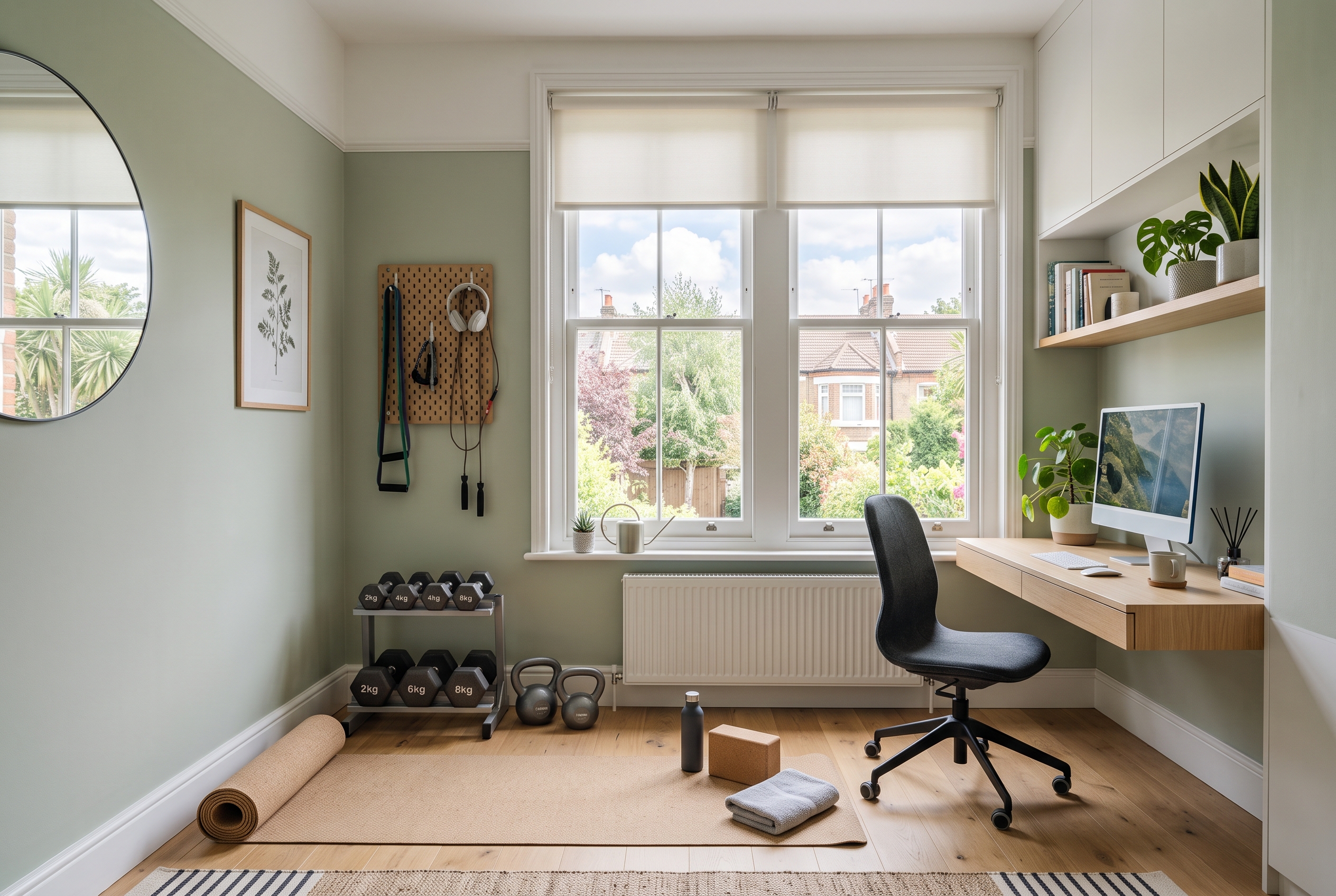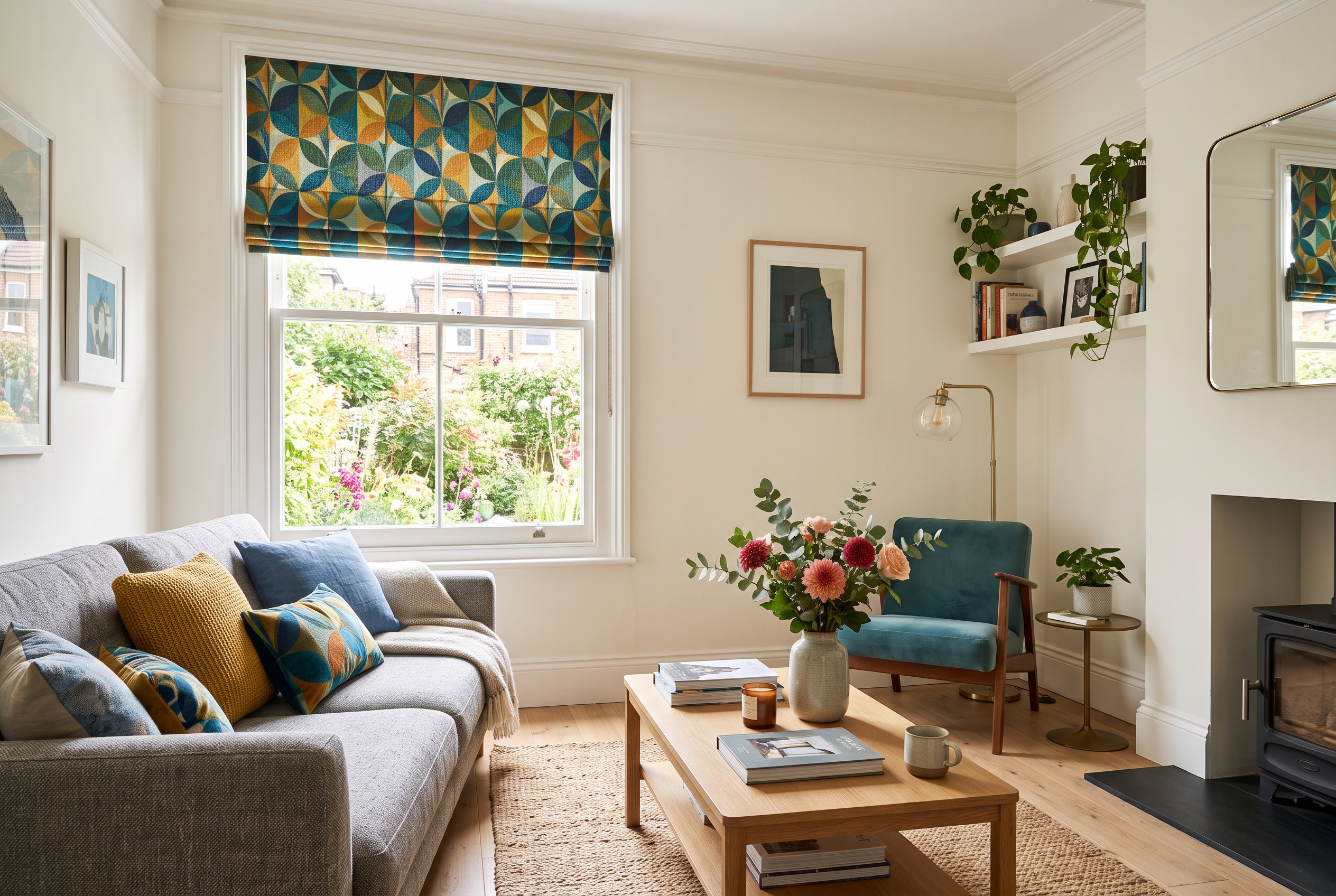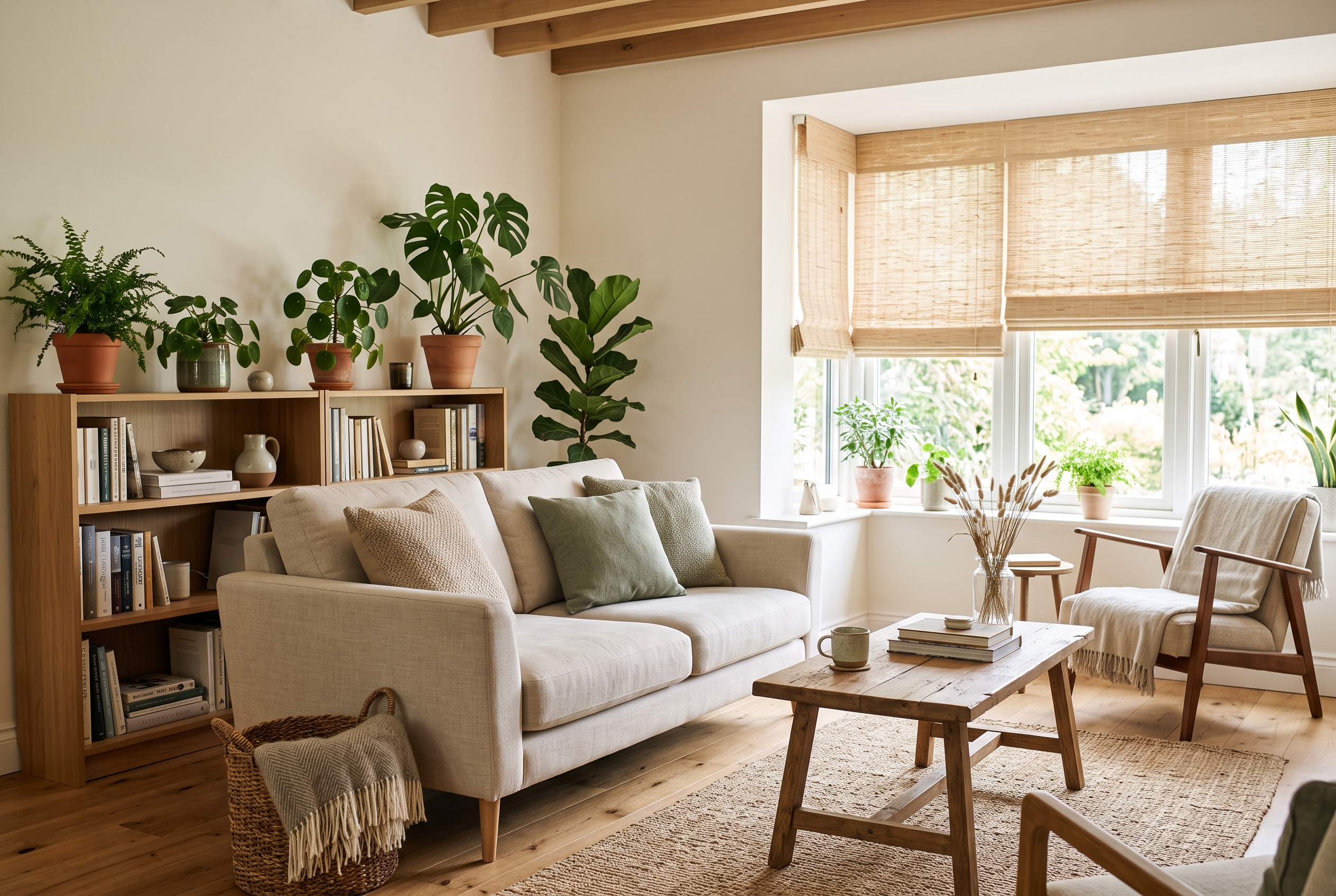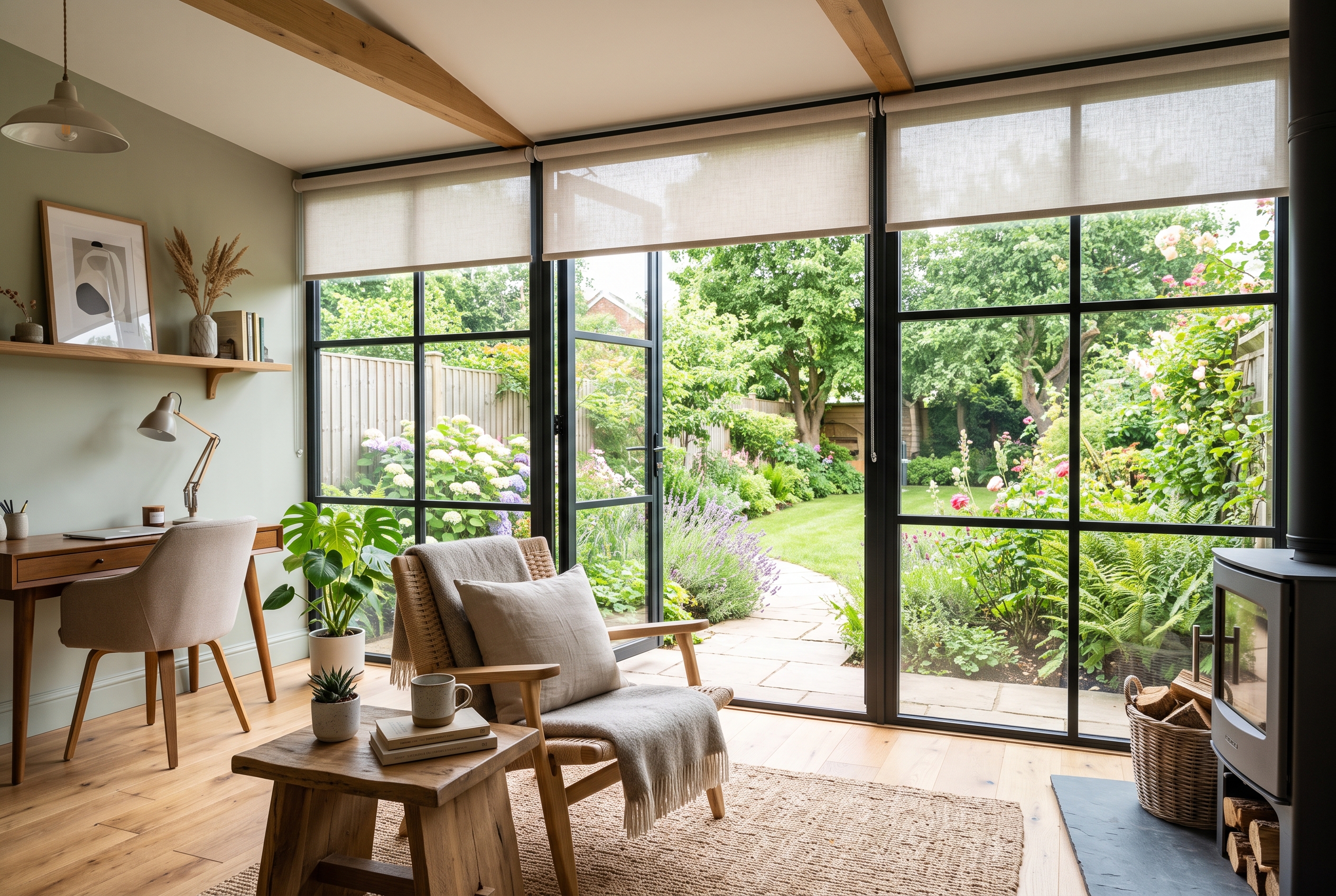
Garden rooms, summer houses and outbuildings have become much more than somewhere to store furniture over winter. Across North Wales and the wider UK, they are being used as home offices, treatment rooms, hobby spaces, gyms, studios and quiet retreats away from the main house.
Because these spaces often have lots of glass, blinds are not just a finishing touch. They can make the difference between a room you use all year and one that is too hot, too bright or too overlooked to enjoy properly.
Why garden rooms need a different approach
A garden room is not quite the same as a conservatory and not quite the same as a spare bedroom. It may have large doors, fixed side windows, roof lights, timber frames, compact walls and a different level of insulation from the main house. It may also sit closer to neighbours, footpaths or another part of the garden than you expected once the furniture is in.
That means the blinds need to work hard. They must control sunlight, protect privacy, cope with temperature changes and still look right in a space that is often designed to feel light and open.
Managing heat and glare
Glare is one of the biggest issues in garden rooms. A desk facing the window can become uncomfortable on bright days, and screens can be difficult to see even when the room itself feels pleasant. Roller blinds, vertical blinds, pleated blinds and day and night blinds can all help, depending on the window shape and how much flexibility you need.
For office use, a light-filtering fabric is often better than a very dark blind during the day. It softens the brightness without making the room feel closed in. If the space is used for watching television, exercise videos or presentations, a dimout or blackout option may be more useful.
Heat control is worth planning from the start. South-facing garden rooms can warm up quickly in summer, especially with bifold or sliding doors. Choosing blinds that reflect or diffuse sunlight helps keep the room more comfortable and can protect flooring, furniture and equipment from fading.
Privacy from neighbours and the main house
Privacy can be surprising in a garden building. During the day, you may feel perfectly tucked away. At night, once lights are on inside, the room can become very visible from the house, neighbouring gardens or a lane beyond the boundary.
Day and night blinds are useful where you want flexible privacy because the fabric bands can be adjusted without fully blocking daylight. Roller blinds give a clean, simple finish and are easy to lower in the evening. Vertical blinds can work well across wide doors because the slats can be angled, drawn back or closed depending on how the room is being used.
Moisture and temperature changes
Not every outbuilding is heated and ventilated in the same way as the main home. Some are used daily, while others are opened mainly at weekends or in warmer months. That can mean more temperature variation and, in some spaces, a greater risk of condensation.
For a well-insulated, regularly heated garden office, most domestic blind options may be suitable. For a summer house, workshop or occasional-use outbuilding, moisture-resistant materials are often a safer choice. Faux wood, certain roller fabrics and practical wipeable finishes can be more forgiving than delicate natural fabrics.
Door and window practicalities
Garden rooms often include bifold doors, French doors, sliding doors or large glazed panels. The best blind depends on how those doors open and how often they are used. A blind that looks good but catches every time the door opens will quickly become irritating.
Before choosing, consider:
- Whether the doors fold, slide or open inwards.
- How much wall or frame space is available for brackets.
- Whether blinds need to clear handles and locks.
- How often the doors are opened during the day.
- Whether individual panels need separate control.
- Whether roof lights or high windows need motorisation.
Made-to-measure blinds are particularly helpful in garden rooms because dimensions can be less standard than in the main house. Accurate measuring avoids awkward gaps, trapped fabric and blinds that interfere with the doors.
Style without making the room feel heavy
Most people want a garden room to feel bright, calm and connected to the outdoors. Very heavy window treatments can work against that. Soft neutrals, warm natural textures and slim profiles usually suit the setting well.
If the room is used as a professional workspace, keep the blinds tidy and understated. If it is a hobby room or relaxation space, you can be more playful with colour or texture. The key is to choose something that belongs in the room rather than simply copying the blinds from the main house.
Make your garden room easier to use
The right blinds help a garden room work in real life, not just in photographs. They control glare, protect privacy, reduce overheating and make the space feel finished. Whether your garden building is an office, studio, gym or summer retreat, Lloyds Blinds can advise on made-to-measure options that suit the glazing and how you use the room. Get in touch for a friendly quote.